
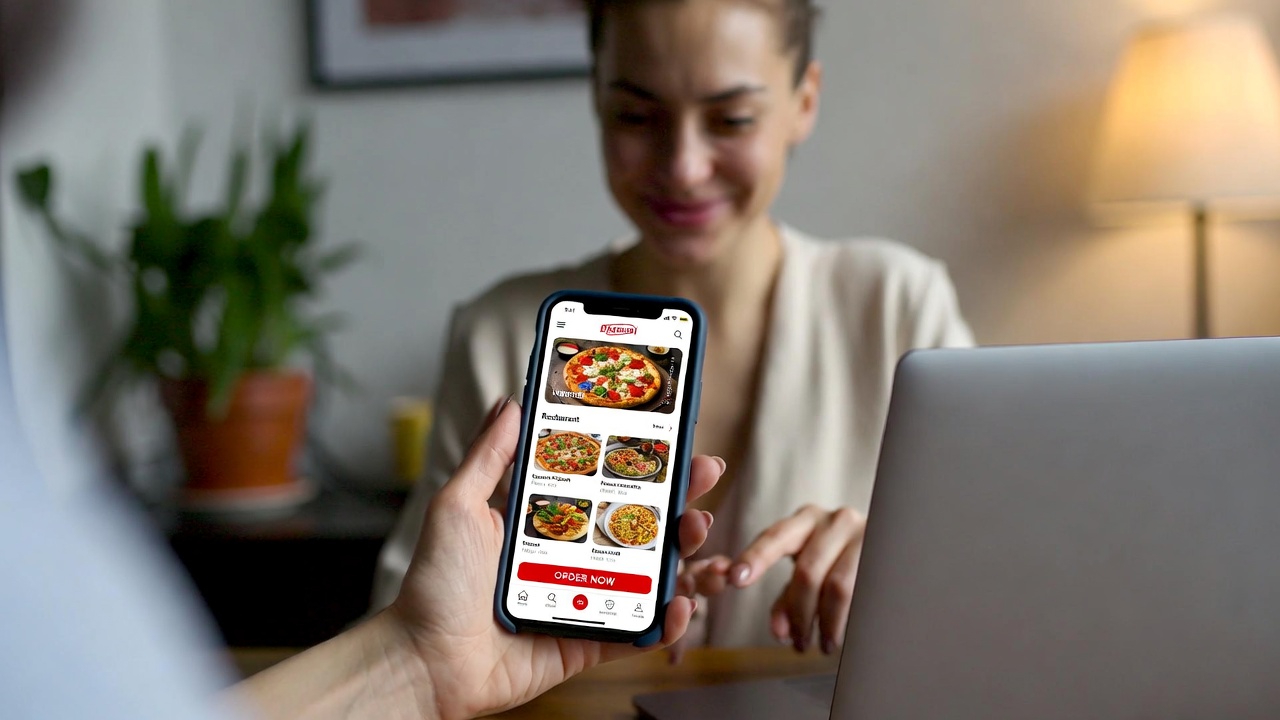
In the fast-paced world of food service, independent restaurants face a constant battle to stay afloat amid rising costs, fierce competition, and shifting consumer behaviours. While third-party delivery giants like Uber Eats, DoorDash, and SkipTheDishes have become household names, offering convenience to customers and a lifeline to businesses during tough times like the COVID-19 pandemic, they come at a steep price. Commission fees can eat up to 30% of each order, squeezing already thin margins. Yet, surprisingly, the majority of independent eateries still lack their own dedicated online ordering system. Many that hastily launched them in 2020 have since dismantled or abandoned them, citing high costs, or management hassles, or time constraints as excuses.
But here’s the truth: relying solely on third-party platforms is a missed opportunity that’s costing these businesses dearly in lost revenue and customer loyalty. An in-house online ordering platform isn’t just a tech upgrade—it’s a strategic tool for driving incremental sales, reducing dependency on middlemen, and building a more resilient operation. In this article, we’ll explore why every independent restaurant, whether quick-service or full-table dining, should invest in and actively promote their own online platform. We’ll break down the barriers, debunk common myths, and outline practical steps to make it a revenue powerhouse. By the end, you’ll see how this simple shift can transform occasional takeout orders into a steady stream of profitable business.
The Current Landscape: An Over-Reliance on Third-Party Online Ordering Systems
Let’s start with the reality on the ground. According to industry reports from sources like the National Restaurant Association, over 70% of restaurants use at least one third-party delivery service for online orders. These platforms exploded in popularity during the pandemic, when dine-in restrictions forced operators to pivot overnight. Independent restaurants, in particular, scrambled to adapt, with many setting up a makeshift online ordering system. Many legacy POS systems didn’t have online ordering at all, so those restaurants had to rely on expensive 3rd party integrations or switch to cloud POS systems such as Genius Restaurant POS that offer online ordering for free with the POS. However, post-pandemic data shows a concerning trend: adoption rates for online ordering have plateaued or even declined among independents, hovering around 40-50%.
Why the hesitation? Owners often point to the perceived burdens. “It’s too expensive to set up,” they say, or “We don’t have time to manage another system.” Some complain about the tech learning curve or fear it will complicate operations. But dig deeper, and the real culprit emerges: lack of traffic. Without customers flowing through their own channels, these systems feel like ghost towns, leading owners to conclude they’re not worth the effort. This creates a vicious cycle—neglect leads to invisibility, which reinforces the decision to abandon them.
Third-party services, while convenient, exacerbate the problem. They charge hefty fees not just to restaurants (often 15-30% per order) but also to customers through surcharges and delivery markups. This inflates prices, potentially driving away price-sensitive patrons. Moreover, these platforms own the customer data, limiting restaurants’ ability to build direct relationships. Restaurants using third-party apps tend to see lower rates of repeat business because customers loyalty shifts to the app, not the eatery. In essence, independents are paying to borrow customers rather than owning the relationship.
Debunking the Myths: Why In-House Systems Are Easier and More Profitable Than You Think
It’s time to dismantle the excuses. First, the cost myth. Modern online ordering solutions from integrated POS systems like Genius are free, they come built into the POS—far less than the commissions paid on a single day’s third-party orders. Setup is straightforward, often involving a simple URL embed, and integration with existing payment processors eliminates the need for custom development. If the system is tied into the POS then the menu is coming from the same system you’re already maintaining. A few simplifications and maybe a couple price changes to manage the unique nature of carryout service, and you’re done.
Management concerns? Phone orders, the old-school alternative, are actually more labor-intensive. They tie up staff during peak hours, lead to miscommunications (ever had a “no onions” request lost in translation?), and require manual entry into the POS. Online ordering system technology automates this: orders arrive pre-paid and pre-verified, with customizable menus that handle modifiers, upsells, and inventory in real-time. Restaurants with in-house online ordering reduce order errors by up to 50% and speed up fulfillment by 20-30%. Far from being a nuisance, these systems save time, allowing staff to focus on food prep and customer service.
Then there’s the time factor. Yes, launching requires an initial investment of effort, but ongoing maintenance is minimal—update menus seasonally, monitor analytics, and that’s it. Compare this to juggling multiple third-party dashboards, each with its own rules, promotions, and disputes. The key insight? The real barrier isn’t the system itself; it’s the failure to market it effectively. Without visibility, no platform will generate traffic. But with smart promotion, it becomes a sales engine.
Finally, we should talk about customer service. Lots of your customers like online ordering and so do your staff. Not everyone wants a “personalized” experience. Just because you would prefer to be served by a human, doesn’t necessarily mean everyone else does too. Young people have learned the automation systems are faster for them, they don’t have to talk to people, and they can take as long as they want, and they don’t need to figure out how to use a telephone (let’s face it, “the kids” just don’t communicate like that anymore). Online ordering customers free up your friendly staff for those guests that prefer a human to human interaction – which means everyone gets more service, in the way that they prefer, and you earn more satisfied customers – and more importantly – more money.
The Power of Marketing: Turning Your Online System into a Traffic Magnet
Here’s where many independents falter—they treat online ordering as a “set it and forget it” feature. In reality, it’s a product that needs marketing just like your signature dish. Customers won’t magically discover it; you have to guide them there. Start with your digital real estate: Place a prominent “Order Online” button on your homepage, above the fold, right beside your phone number and location address (if they are not there now add those too!) with eye-catching design—bold colors, animations, or even a floating call-to-action. Integrate it into your Google Business Profile and social media bios for seamless access.
Offline promotion is equally crucial. Hang “Order Online Now” banners outside your storefront to catch passersby. Print your ordering URL on receipts, napkins, menus, and to-go bags. Outfit staff t-shirts with the slogan and QR code. If you have a catering or delivery vehicle, wrap it in branding that screams convenience. Your take-out bags, napkins, cups should all be printed with your logo and how diners can order food online at YOUR online ordering site, not the 3rd party delivery platforms. Even for table-service spots, remind diners via table tents or verbal upsells: “Skip the wait next time—order ahead online!”
Digital marketing amplifies this. Run targeted ads on Facebook or Instagram highlighting exclusive online deals, like 10% off pickups or free sides for first-time users. Emailed newsletters to your loyalty list can announce the system with incentives. Partner with local influencers for shoutouts, or leverage SEO by optimizing your site for searches like “best pizza takeout near me.” Tools like Google Analytics can track what’s working, allowing you to refine tactics.
The results? Incremental sales build gradually. At first, a trickle of curious customers tests the waters. As they experience smooth pickups—accurate orders, shorter waits—they return and spread the word. A case study from ChowNow shows that restaurants actively promoting their systems see online orders jump 25-40% within six months, with average ticket sizes 15% higher due to easy upsells. This isn’t overnight magic; it’s compound growth. Quick-service joints might see faster adoption for lunch rushes, while table-service venues benefit from pre-theater or family takeout orders.
Building Long-Term Value: Reduced Fees, Loyal Customers, and Scalable Growth
The payoffs extend beyond immediate sales. By owning your online channel, you slash third-party fees, putting more money back into your pocket. For a restaurant doing $10,000 in monthly takeout via apps, that’s potentially $2,000-3,000 saved—funds that can reinvest in staff, ingredients, or expansions.
Customer loyalty skyrockets too. Direct ordering captures emails and preferences, enabling personalized marketing. Send birthday discounts or “We miss you” offers to re-engage lapsed patrons. This fosters a community around your brand, turning one-time buyers into regulars. Data from Square reveals that restaurants with proprietary systems retain 20% more customers year-over-year.
Moreover, it enhances your business’s overall value. In an era where digital presence is key, a robust online system makes your restaurant more attractive to buyers or investors. It’s scalable—handle volume spikes without extra hires—and future-proof against platform changes or fee hikes.
Many restaurants, which integrated their own online ordering system during the pandemic and marketed it aggressively via social media and in-store signage report online sales now account for 30% of revenue, with minimal third-party reliance.
Of course, challenges exist. Tech glitches can occur, so choose reliable providers with strong support. Start small: Pilot with pickup only, don’t worry about delivery unless you can make a good practical business case. Measure success with KPIs like order volume, conversion rates, and customer feedback.
What Does Success Look Like?
Be realistic. We’re looking for incremental sales – we’re not looking to build another restaurant onto the one we already have, so the excuse that “our kitchen doesn’t have the capacity for any more orders” is usually an excuse not a good reason to not even try. Unless you get incredibly lucky, adoption of these systems tends to be a slow trickle, not a waterfall.
Consider this, if you gain 1 additional order a day, if the average order is $45 that adds up to $14,000 of incremental sales that goes straight to the bottom line, in a restaurant that already exists, there are a lot of sunk costs, ie. staff that are already paid, and food that is likely already in your fridges. Double and triple that and numbers start to get interesting. With no additional marketing at all we’re seeing restaurants that are easily able to bring in $30,000-$50,000 in incremental sales, which mops up a lot of sunk cost. Imagine if they leaned into it and marketed the online ordering presence!
And remember, unlike 3rd party platforms, these systems are completely configurable by the restaurant owner. You control the times and days when orders can be sent in, the waiting period between when an order is sent in and available for pickup, and many systems have automatic load balancing for your busiest times so that your kitchen isn’t overwhelmed. For events and holidays, restaurants can control closed for online order days, and if the restaurant gets too busy on a sports day, just have the manager close the online ordering system with the touch of a button, and reopen it when you’re ready to accept orders again.
Conclusion: Embrace the Shift for a Thriving Future
In summary, every independent restaurant should prioritize its own online ordering system not as an optional add-on, but as a core driver of incremental sales. By debunking myths around cost and complexity, committing to smart marketing, and reaping benefits like fee savings and loyalty, you’ll unlock revenue streams that third-party platforms can’t match. The pandemic taught us adaptability is survival; now, it’s time to evolve for prosperity.
Don’t wait for customers to find you—invite them in digitally. Invest today, promote relentlessly, and watch your business grow. Your bottom line—and your customers—will thank you.
About Armagh POS Solutions
Armagh has been serving the retail, restaurant and grocery industries in Canada since 1979, delivering solutions for a range of operators from single-unit small businesses to multi-unit national chains.
We are specialists in touch screen and scanning point of sale (POS) systems for both restaurants and retail stores, cash registers, scales, liquor inventory control systems, and grocery label and wrapping equipment.
With 40+ years POS industry experienced the sales staff at Armagh provides experienced consultants in point-of-purchase management, customer service efficiency, process automation, and restaurant order management.
Armagh’s award-winning Catapult Retail POS Software and Digital Dining POS Restaurant Software are best-in-class, and Armagh is a QIR and Diamond Toshiba Alliance Partner.